Sunday, February 12, 2012
Lester Bowie plays "Saving All My Love For You"
Lester Bowie's Brass Fantasy plays "Saving All My Love For You" in Berlin in 1986.


Saturday, July 23, 2011
Campaign for Cootie
 My last post was about the centennial of Cootie Williams' birth. Duke Ellington wrote "Concerto for Cootie" and "Tutti for Cootie" for Williams. In that spirit, I would like to start "Campaign for Cootie."
The results were just announced for this year's Critics Poll. Abbey Lincoln and Paul Chambers were voted into the Hall of Fame. Surprisingly, Cootie Williams is not in the Down Beat Magazine Hall of Fame! I'd like to solicit your help - Vote for Cootie today, using the instructions from DB's website:
Since this poll is for DownBeat readers only, you do need to be a subscriber — either to our magazine or our e-Newsletter (click here for sample) — to vote.
If you do subscribe, simply fill out all of the categories, or just the ones that interest you. Please vote only once. Any multiple votes will be disqualified.
If you are not a subscriber, sign up today. Just go to downbeat.com and hit the “subscribe” button to get the magazine.
Or you can subscribe to DownBeat's eHeadlines newsletter for free. Sign up for our free e-Newsletter here. It's quick and easy to subscribe. Without having your e-mail on file, your vote won't count!
That's all it takes. To get started on the poll, just enter your name and e-mail address, then follow the prompts. You can select one choice from the list for each category, or write in your choice, if it doesn't appear on the list.
PLEASE PASS THIS ON TO ALL YOUR JAZZ FRIENDS !!!!
Sunday, July 10, 2011
Cootie Williams Centennial
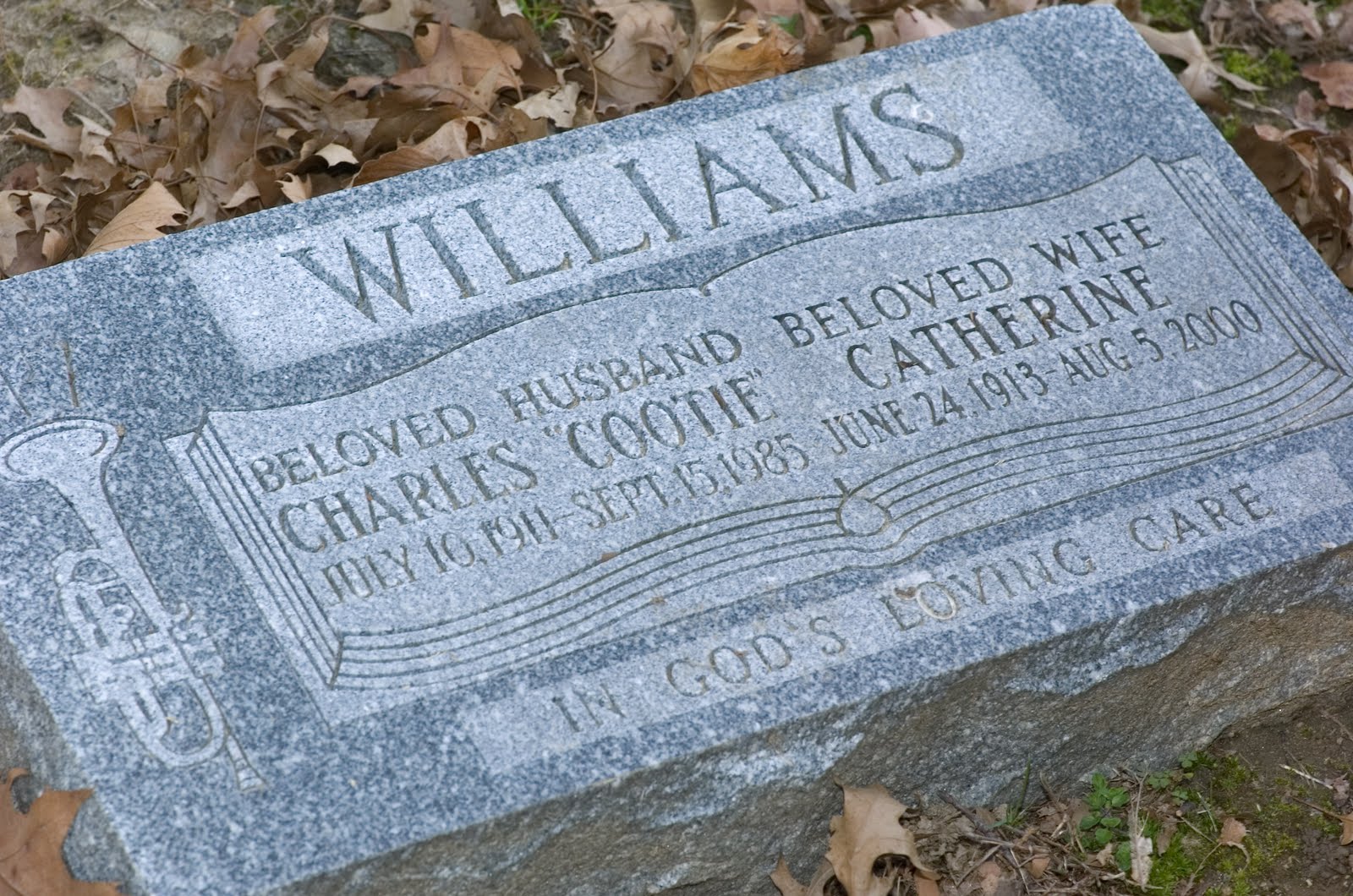
Today marks the 100th anniversary of the birth of trumpet great Charles Melvin Williams, better known as "Cootie." He was most famous for his skill with the plunger, but as can seen below, he was a master of the open horn, too.
Actually, he may have been born 103 years ago, 102 or 101 years ago. There are several dates of birth given for him and the truth may have been that he didn't know when he was born. The only things the various birthdates have in common is the month of July, even the day could have been the 10th, 14th or 24th!

That said, did you know no one has written a biography of Williams? He had a very interesting career - two stints with Duke Ellington, and a year with Benny Goodman before embarking on a period as a big band leader. His band boasted people like Eddie "Cleanhead" Vinson, Eddie "Lockjaw" Davis, Pearl Bailey, Bud Powell and Charlie Parker. He was the first to record Thelonious Monk's 'Round Midnight and Epistrophy. For a time, 'Round Midnight was the band's theme song!
I've spent the past few months collecting reference materials and conducting interviews, all towards writing a biography of the great and underrated Cootie Williams.
Finally, check out Cootie's plunger work from a 1966 performance filmed in France..
Happy Birthday, Cootie!
Sunday, June 19, 2011
Giant Steps
John Coltrane's solo on his 1959 recording of Giant Steps is an acknowledged classic. Here are three different homages via YouTube.
First, a scroll through the transcribed solo as the recording plays.
Second, a robot programmed to play the solo.
Lastly, a virtuoso performance of a gentleman playing along with Trane's recording on piano and bass guitar simulataneously!
First, a scroll through the transcribed solo as the recording plays.
Second, a robot programmed to play the solo.
Lastly, a virtuoso performance of a gentleman playing along with Trane's recording on piano and bass guitar simulataneously!
Sunday, May 08, 2011
New Coltrane

Good news and bad news. The good news - there's some "new" Coltrane on the market. The bad news - you have to buy a box set in order to get it.

As part of the 50th anniversary celebrations for Impulse, they're releasing a 4-CD set entitled Impulse! @50: First Impulse - The Creed Taylor Collection. John Coltrane's previously unreleased demo recording for his Africa/Brass big band album is included, plus some alternate takes from the session. Albums like Gil Evans' La Nevada, Ray Charles' Genius + Soul = Jazz, and Oliver Nelson's Stolen Moments are part of the set, but who doesn't have those already?
Sunday, April 03, 2011
New Smithsonian Jazz Collection

During my high school years, the local public library was one of the resources I would use to hear jazz recordings. One I vividly remember was the Smithsonian Collection of Classic Jazz. It was a multi-record set that included items from Scott Joplin, Duke Ellington, Charlie Parker, etc.
Last week, a new edition was released. It's six CDs and 111 tracks! (I think the original was 8 LPs.) It's been updated to reflect the changes that have occurred since its original 1973 release. But all the great classics (West End Blues, Hawk's Body and Soul, Duke's Ko-Ko) are still there. It would be a great investment to fill in those gaps in your jazz knowledge or collection.
As a taste, there's a link to a Mary Lou Williams recorded of Virgo, part of her Zodiac Suite. By coincidence, that happens to be my sign: http://soundcloud.com/smithsonian-folkways/virgo-mary-lou-williams-jazz
And if you're feeling brave, take their jazz quiz while you're there: http://www.sporcle.com/games/Smithsonian_Folk/JazzChallenge25

Sunday, March 27, 2011
Stritch Beer!


Michael Bowe has relocated his Angel City Brewery from Torrance to downtown Los Angeles. He was recently featured in articles in the Los Angeles Times and the Los Angeles Downtown News.


The brewery is not too far from our bookstore, Metropolis Books. We share quite a few similarities: There's only one letter difference in our surnames, we have LA's City Hall in our business logos, and he's a saxophone player who loves jazz. Mr. Bowe has even named beers after Charlie Parker, Lester Young and Rahsaan Roland Kirk. The prize winning Kirk brew is called "Rahsaan Roland Kirk Stritch Stout."
I wandered over to buy some beer, along with a T-shirt. The website describes it thusly: "Rahsaan Roland Kirk Stritch Stout, 10% ABV is our Biggest and most Luscious Beer! Made with Lager Yeast, this beer will surprise you how drinkable it is! Complex, Dark, Malty and Warm. No wonder why Stritch Stout won a Gold Medal in the Los Angeles International Beer Competition."
I can't tell you how it tastes since I can't bring myself to open the bottle!


Saturday, February 26, 2011
Registering for World War I


At the rather ripe age of 41, at least in military terms, my great grandfather, John Bowie, registered for the World War I draft. By 1918, the US government required men between the ages of 18 to 45 to register, so he wasn’t quite at the top of the age pool.
In browsing these records, I also came across the records for Duke Ellington, Louis Armstrong and Jelly Roll Morton. Only Armstrong described himself as a musician at the time. Ellington was a government messenger in Washington, DC, while Ferdinand Joseph Morton gave his occupation as actor. According to Morton biographies, in his early years he travelled the country as part of a vaudeville troop.
On this form, he gave his date of birth as September 13, 1884. As far as I can tell, this date hasn’t been reported anywhere else. I’ve seen dates of September 20, 1885 and October 20, 1890. His tombstone has 1890 for the year of his birth. (He died here in Los Angeles in 1941.) Morton was also known to stretch the truth quite a bit. Some of these dates may have been due to vanity or in support of his claim of inventing jazz in 1902. Or course, it may have been simpler than that – in the days of home births and non-recorded births, he might not have known when he was born!
In browsing these records, I also came across the records for Duke Ellington, Louis Armstrong and Jelly Roll Morton. Only Armstrong described himself as a musician at the time. Ellington was a government messenger in Washington, DC, while Ferdinand Joseph Morton gave his occupation as actor. According to Morton biographies, in his early years he travelled the country as part of a vaudeville troop.
On this form, he gave his date of birth as September 13, 1884. As far as I can tell, this date hasn’t been reported anywhere else. I’ve seen dates of September 20, 1885 and October 20, 1890. His tombstone has 1890 for the year of his birth. (He died here in Los Angeles in 1941.) Morton was also known to stretch the truth quite a bit. Some of these dates may have been due to vanity or in support of his claim of inventing jazz in 1902. Or course, it may have been simpler than that – in the days of home births and non-recorded births, he might not have known when he was born!
Thursday, February 17, 2011


Thursday, February 10, 2011
A few minutes of Soprano Saxophone
The soprano sax is a very difficult instrument to control. In the wrong hands, it can make for a painful listening experience. Fortunately, there are some great masters.
National Public Radio recently did a feature entitled on the instrument entitled Soprano Sax: The Story of a Skinny Horn. They mentioned the main practitioners of the instrument, Sidney Bechet and John Coltrane. But the soprano sax was not unrepresented in the swing era, the time between the heydays of Bechet and Coltrane. I’d like to add Johnny Hodges and Charlie Barnet.
Johnny Hodges was a Bechet protege . He can be seen playing soprano sax in this clip from “Check and Double Check”, a truly horrible Amos and Andy movie. In 1940, Hodges decided he should be paid extra to double on soprano. Ellington refused and Hodges abandoned the instrument.
Charlie Barnet was a big band leader who had a few big hits in the Swing Era, but is unfairly neglected these days.
So, the man is granted another wish. Well, since the man is a musician as well as a humanitarian, he asks for a soprano sax that plays in tune. The Genie pauses for a minute and asks….”Uh, can I see that map again???”
National Public Radio recently did a feature entitled on the instrument entitled Soprano Sax: The Story of a Skinny Horn. They mentioned the main practitioners of the instrument, Sidney Bechet and John Coltrane. But the soprano sax was not unrepresented in the swing era, the time between the heydays of Bechet and Coltrane. I’d like to add Johnny Hodges and Charlie Barnet.
Johnny Hodges was a Bechet protege . He can be seen playing soprano sax in this clip from “Check and Double Check”, a truly horrible Amos and Andy movie. In 1940, Hodges decided he should be paid extra to double on soprano. Ellington refused and Hodges abandoned the instrument.
Charlie Barnet was a big band leader who had a few big hits in the Swing Era, but is unfairly neglected these days.
A man walks down the beach and finds a bottle on the shore. He picks it up and rubs it. A Genie appears and grants him one wish. Since the man is a humanitarian, he asks the Genie to solve the conflicts in the Middle East. The Genie asks for a map and studies it for a while. The Genie apologizes and says that he can’t grant the wish because the problems are too complicated and started even before he was put in the bottle….
So, the man is granted another wish. Well, since the man is a musician as well as a humanitarian, he asks for a soprano sax that plays in tune. The Genie pauses for a minute and asks….”Uh, can I see that map again???”
Tuesday, February 01, 2011
Jazz Stamp
 A few months ago, I suggested it was time for some more postage stamps honoring jazz artists. That hasn’t come to pass yet, but next month will see a stamp that honors the art form itself. Please go out and buy them & use them. The powers that be love to use sales figures as a reason to do (or not do) projects. Since this is a ‘forever’ stamp, you can hoard them and still use one for first class postage ten, twenty, a hundred years from now!
Appropriately, it will be launched in New Orleans in March. This great looking piece of art was designed by Paul Rogers; you can get the story behind the stamp at his website.
Wednesday, January 26, 2011
Barrie Lee Hall, Jr. (1949-2011)

I sent an email to Ellington trumpet virtuoso Barrie Lee Hall, Jr. in early September of last year in the hopes of talking with him about an Ellington related project (details to follow soon). I didn’t hear anything, so I re-sent the email at the beginning of this year. This time I received a reply and we set a time to talk. I was a little nervous about the impending talk since his emails were rather terse. After talking with him, I found I couldn’t have been more wrong; he was a very warm and open person in conversation. (What I took for reluctance was probably just someone who just didn’t like to type!)
Part of our talk was on the Super Bowl IX half-time show in the previous blog entry. I had sent him a link to the video the day before I spoke to him. His simple reply was:
“Man, that made me happy! Thank you!”
If you’re over 40, you remember the days where if you weren’t in front of a TV to watch a televised sports show, it was gone forever. The summer, of course, was for reruns of regular shows, but not of things like ’live’ events. Since Mr. Hall was an active participant in the half-time show, he had never seen it. (He’s the tall trumpet player in the back, second from the left.) He had forgotten that Grambling was there, but he vividly recalled that the Ellington band’s white dinner jackets provided little protection from the cold on the field.
He thought he would be in the LA area in the near future; he’d give me advance notice and we would meet up for dinner or something. That was on Saturday, January 8th. This morning, I was saddened to find out that he passed away at age 61 on Monday, January 24th.
RIP, Barrie Lee Hall and “Thank you!”
Part of our talk was on the Super Bowl IX half-time show in the previous blog entry. I had sent him a link to the video the day before I spoke to him. His simple reply was:
“Man, that made me happy! Thank you!”
If you’re over 40, you remember the days where if you weren’t in front of a TV to watch a televised sports show, it was gone forever. The summer, of course, was for reruns of regular shows, but not of things like ’live’ events. Since Mr. Hall was an active participant in the half-time show, he had never seen it. (He’s the tall trumpet player in the back, second from the left.) He had forgotten that Grambling was there, but he vividly recalled that the Ellington band’s white dinner jackets provided little protection from the cold on the field.
He thought he would be in the LA area in the near future; he’d give me advance notice and we would meet up for dinner or something. That was on Saturday, January 8th. This morning, I was saddened to find out that he passed away at age 61 on Monday, January 24th.
RIP, Barrie Lee Hall and “Thank you!”
Monday, January 24, 2011
Jazz at the Super Bowl
It’s a fair bet that there won’t be any jazz during the halftime show at this year’s Super Bowl. But once upon a time, they not only used the whole halftime show to pay tribute to recently deceased jazz legend; they didn’t even cut away to commentators or commercials! (Duke Ellington had died a little over seven months prior to this event. The death of Satchmo inspired a similar gesture in 1972.)
Super Bowl IX was supposed to be played indoors at the newly constructed New Orleans Superdome, but it wasn’t completed in time. Instead, the January 12, 1975 game was played outside in Tulane Stadium.
At halftime, the Pittsburgh Steelers led the Minnesota Vikings by the score of 2-0. The temperature on the field was in the mid-40s. Anyone who has played a musical instrument can tell you that it’s hard to stay in tune when the weather is cold. As the Grambling band marches onto the field, you can hear the effect it has on their intonation.
After Grambling’s overture, the Duke Ellington band, under the direction of son Mercer Ellington, takes over. (Dig Mercer’s jacket!) Fortunately, they don’t fall prey to the same intonation problems.
The band is crowded onto a relatively small float. As they play, Ellington themed cupcakes surreally swirl around the field. The last of the old guard, Cootie Williams, gets a significant amount of solo time on Take the “A” Train and “C-Jam Blues.” He’s in fine spirits, even though increasing health problems would make this his last year with the band.
The halftime show is spread between these two video clips. It starts about 3 minutes in on the first one and concludes on the second one.
Sunday, October 10, 2010
The King of American Jazz


While browsing through Amazon a few days ago, I came across a DVD title I was unfamiliar with. The release, Duke Ellington et son orchestre, had no accompanying information – date of recording, personnel, location, nothing. Since I didn’t want to buy a pig in a poke, I decided to Google the title. The full title turned out to be Le Roi du Jazz Americain – Duke Ellington et son Orchestre (The King of American Jazz – Duke Ellington and his Orchestra). Lo and behold, the source of the recording was the National Archives and Records Administration. Best of all, the video is in the public domain and can be downloaded legally and for FREE! Thanks, Uncle Sam! [There are other interesting videos on the site - Jack Teagarden with Hoagy Carmichael, Bobby Hackett, John Scofield, a cartoon featuring the voice of Dizzy Gillespie – (The Hole).]
In September of 1963, Duke Ellington and his Orchestra embarked on a goodwill tour of the Middle East sponsored by the US State Department. The stops included Damascus, Amman, Kabul, New Delhi and Tehran. Ellington was out of commission for some of the dates due to hospitalization for a virus.
Fortunately, Ellington is back by the time of this recording. The source of this film might be from a concert on November 14, 1963 in Khuld Hall, Baghdad, Iraq. According to Ken Vail’s Ellington diary book “This concert is televised live.” It definitely seems to be from a television broadcast, since Ellington is periodically checking to see if he needs to insert a break in the proceedings. A few days later, the tour was canceled upon the assassination of President John F. Kennedy.
The sound and video have a few blemishes here and there, but overall, it’s a great concert. Cootie Williams is an audience favorite with his showcase Tutti for Cootie. Billy Strayhorn gets a solo spot on his famous composition Lush Life and then takes things out with Take the “A” Train.
The songs are: Afro-Bossa; Stompin' at the Savoy; Guitar Amour; Perdido; Honeysuckle Rose; Tutti for Cootie; Kinda Dukish /Rockin' in Rhythm; I Got It Bad; Things Ain't What They Used To Be; The Eighth Veil; Hits Medley [Satin Doll, Solitude, Don't Get Around Much Anymore, Mood Indigo, I'm Beginning To See the Light, Sophisticated Lady, Caravan, Do Nothin’ 'Till You Hear from Me, I Let a Song Go Out of My Heart & Don't Get Around Much Anymore]; Diminuendo in Blue/Blow by Blow; Lush Life; Take the "A" Train .
The personnel is: Cootie Williams, Rolf Ericson, Herbie Jones, Cat Anderson – trumpets, Lawrence Brown, Chuck Connors, Buster Cooper – trombones; Johnny Hodges, Russell Procope, Jimmy Hamilton, Paul Gonsalves, Harry Carney – reeds; Duke Ellington, Billy Strayhorn – piano; Ernie Shepard –bass; Sam Woodyard – drums.
In September of 1963, Duke Ellington and his Orchestra embarked on a goodwill tour of the Middle East sponsored by the US State Department. The stops included Damascus, Amman, Kabul, New Delhi and Tehran. Ellington was out of commission for some of the dates due to hospitalization for a virus.
Fortunately, Ellington is back by the time of this recording. The source of this film might be from a concert on November 14, 1963 in Khuld Hall, Baghdad, Iraq. According to Ken Vail’s Ellington diary book “This concert is televised live.” It definitely seems to be from a television broadcast, since Ellington is periodically checking to see if he needs to insert a break in the proceedings. A few days later, the tour was canceled upon the assassination of President John F. Kennedy.
The sound and video have a few blemishes here and there, but overall, it’s a great concert. Cootie Williams is an audience favorite with his showcase Tutti for Cootie. Billy Strayhorn gets a solo spot on his famous composition Lush Life and then takes things out with Take the “A” Train.
The songs are: Afro-Bossa; Stompin' at the Savoy; Guitar Amour; Perdido; Honeysuckle Rose; Tutti for Cootie; Kinda Dukish /Rockin' in Rhythm; I Got It Bad; Things Ain't What They Used To Be; The Eighth Veil; Hits Medley [Satin Doll, Solitude, Don't Get Around Much Anymore, Mood Indigo, I'm Beginning To See the Light, Sophisticated Lady, Caravan, Do Nothin’ 'Till You Hear from Me, I Let a Song Go Out of My Heart & Don't Get Around Much Anymore]; Diminuendo in Blue/Blow by Blow; Lush Life; Take the "A" Train .
The personnel is: Cootie Williams, Rolf Ericson, Herbie Jones, Cat Anderson – trumpets, Lawrence Brown, Chuck Connors, Buster Cooper – trombones; Johnny Hodges, Russell Procope, Jimmy Hamilton, Paul Gonsalves, Harry Carney – reeds; Duke Ellington, Billy Strayhorn – piano; Ernie Shepard –bass; Sam Woodyard – drums.
Thursday, April 01, 2010
Harry Carney at 100
 Harry Howell Carney was born on April 1, 1910 in Boston, Massachusetts.
Earlier, I had written about how Benny Goodman inspired me to take up the clarinet. Not too long afterwards, my musical horizons expanded to include the great Duke Ellington. There were a lot of unique sounds in the band, but the one that stood out most for me was the deep baritone saxophone sound of Harry Carney.
Carney was an integral part of the Ellington sound, not only as a tonal foundation, but also as a nearly constant presence. He joined the band at age 16 in 1926 and was there until 1974. He was heavily featured, and even when he wasn’t, you knew he was there. One musician has remarked that Ellington had two sax sections – Harry Carney and the other guys.
Last year, I blogged about La Plus Belle Africaine. This version features Victor Gaskin - bass, Russell Procope –clarinet, Rufus Jones –drums, and the birthday boy.
When our high school jazz band needed a baritone sax player, I jumped at the opportunity. (At the time, the instrument and I were about the same size, so it should have been carrying me instead of vice versa.) I played it up until I graduated from college in 1981 .
Harry Carney was one of the first jazz musicians to use circular breathing. Rahsaan Roland Kirk learned it from him and it became one of his trademark concepts. (In a sense, Carney taught me circular breathing, too. The night Ellington died, they showed a video of him holding a long note in a concert performance of Sophisticated Lady. Until I had a visual image of what was going on, I couldn’t get the concept down.) This isn’t the same performance I saw back then, but it is of about the same vintage.
I never got a chance to see Ellington in person and was crushed when he passed away in May of 1974. When I heard that his son Mercer was continuing the band, I consoled myself with the thought that I could see Harry Carney. I’ll never forget one of my bandmates telling me that “that saxophone player you like” died; it was less than 5 months after Ellington. I guess he  didn’t think I believe him, so he presented me with the newspaper clipping.
 didn’t think I believe him, so he presented me with the newspaper clipping.
Happy 100th Birthday to Harry Carney!
Thursday, August 27, 2009
Presidential Centennial

One hundred years ago today, Lester Willis Young was born in Woodville, Missisippi. Happy Birthday, Prez!
Sunday, August 23, 2009
1959 - The Year Everything Changed

 Recently, 1959 The Year Everything Changed arrived at our bookstore. Things like the Cuban revolution, a couple of new states, amongst many others, make up the thesis of this book. From a jazz standpoint, the author covers the changes that occurred in jazz with albums like Miles' Kind of Blue, Coltrane's Giant Steps, Brubeck's Time Out, Mingus' Ah Um and Ornette's The Shape of Jazz to Come.
And another reason I liked this book: yours truly was born 50 years ago on this date. You know you're old when your baby pictures are sepia toned. There's no truth to the rumor that this photo was taken by Matthew Brady.....

Friday, August 14, 2009
Dues and the Abstract Truth
 I've had a few people in the arts (music, acting) tell me they're tired of paying dues. Unfortunately, you don't get to decide when you're done.
At least there is a sort of perverted meritocracy to the world of sports. If you make the statistics and help win games, you get the big contract. Winners sell more tickets, which makes the owners more money. Terrell Owens and now Michael Vick have shown that much can be overlooked in the pursuit of the gold. And how many lifetime bans did the late Steve Howe get in baseball?
Pianist Herbie Nichols is one of the countless talented and nearly invisible musicians out there. One of the phrases you'll see in reference to Herbie Nichols is that he played Dixieland/Traditional Jazz gigs "to pay the bills." (One of the many forms of paying dues.) I accidentally ran across one of these stints when I bought a Rex Stewart album (Dixieland Free-for-all) on eBay. Listen to Herbie's solo on Original Dixieland One-Step and compare it with a sample of his playing as a leader . This was a truly versatile and complete musician!
 Sadly, it doesn't take much to collect most of his output as a leader. As a start, check out his Blue Note sessions. Besides Herbie's original compositions and playing style, you get either Max Roach or Art Blakey on drums.
He wasn't sidelined by the substance abuse problems that have plagued many musicians. For him, it was leukemia. He died in 1963 at only 44 years old.
There's no telling when (or if) you'll ever stop paying dues.
Tuesday, August 04, 2009
Happy Birthday, Satchmo!
 Louis Armstrong was born on this date in 1901. During his lifetime, he used July 4, 1900 because he didn't know his true date of birth. Many years after his death, critic Gary Giddens a Catholic baptismal record that showed when he truly arrived into the world.
If you're looking for some great Satchmo recordings, try the new Mosaic Records box set. I got it last month and have been listening to it like crazy!
By the way, if you look at the 1910 census, it implies that someone in the household knew young Louis' true age! (Click on the image to make it larger; Louis is on the last line.) As a side note, the Mosaic set contains three takes of a Armstrong composition called Old Man Mose, the tale of someone who's checking to see if the title subject is living or dead. Maybe Louis was inspired to write the tale based on his neighbor, Mose Smith (enumerated just ahead of Satchmo's household.)

Tuesday, July 28, 2009
Subscribe to:
Posts (Atom)